
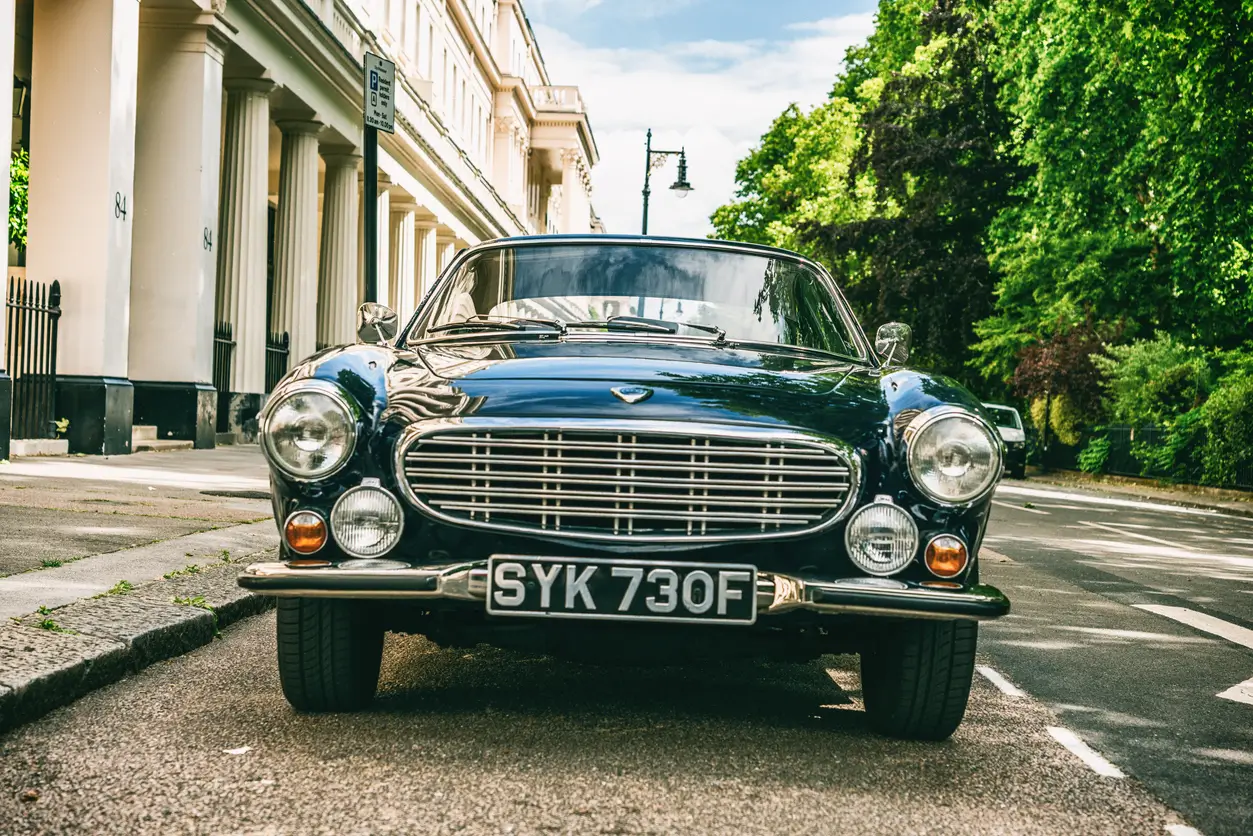
When you picture a classic car, there’s a good chance it will feature a black number plate with silver lettering. James Bond’s iconic Aston Martin DB5, anyone?
Black and silver number plates are very much the cherry on top of a well-maintained classic car from that era. They’re an authentic touch, and quite simply, they’re stylish. However in the UK, these plates are tightly regulated. Fitting them to the wrong vehicle can lead to fines, MOT problems, and unwanted attention from the police.
To make sure you’re clear on the rules of black and silver number plates in the UK, here we’ll explain in what circumstances they can be used so you stay within the law.
When were number plates introduced in the UK?
Vehicle registration plates, more usually called number plates, were introduced in Britain under the Motor Car Act 1903. The first plates were issued in November and December of that year.
These initial plates were ‘dateless plates’ as they didn’t reflect the age of the vehicle. The first two letters of the plate indicated which local authority had issued it, whilst the following four numbers would be unique to the vehicle. Dateless plates were the norm up until 1963, when a new system was introduced with the first letter of the plate indicating the year the number plate was issued.
These first number plates weren’t too strictly standardised in terms of colour. But most usually had a black background with white, silver or grey characters. They were typically made from pressed aluminium or other painted metals. The plates could be rectangular or square.
Over the following years, number plates became primarily black with silver lettering. And today, this kind of plate is associated with pre-war vehicles, post-war classics, and especially iconic British cars from the 1950s and 1960s.
When were black and silver number plates officially used?
Black and silver plates were first introduced in 1903 and became the standard format of number plate used up until the early 1970s (although sometimes the lettering was white or grey).
In 1972, a new style of reflective number plate was introduced, with the front plate being white with black lettering, and the rear plate being yellow with black lettering. These new plates became the widely adopted standard in 1973 and 1974.
Which classic cars can use black and silver number plates today?
Today, black and silver number plates are only legal for a specific category of older vehicles.
Current UK rules state that vehicles must have been constructed before 1 January 1980 to legally display traditional black plates with silver characters. This is a fixed cut-off date that doesn’t move forward each year.
So, even if your car is now over 40 years old and is exempt from vehicle tax, you can’t put these classic plates on it unless it meets the pre-1980 construction rule.
To use black and silver plates legally, your vehicle should meet the following conditions:
It must be a car, motorcycle, or other vehicle that requires a number plate
It must have been built before 1st January 1980
It usually has to be registered in the DVLA historic (classic) vehicle tax class
It must be properly registered with DVLA records that match the vehicle’s age
Just because a classic car is over 40 years old and exempt from vehicle tax, it doesn’t mean it can have black and silver number plates by default. It can only do so if the car was built before 1st January 1980. Likewise, replica classic cars from that period won’t qualify for the number plates if they were made more recently.
What vehicles are exempt from vehicle tax?
A range of vehicle types are exempt from paying Vehicle Excise Duty (VED) – usually called road tax or vehicle tax – in the UK. When it comes to classic cars, they’re exempt from VED when they reach 40 years of age.
If your classic vehicle was built or first registered over 40 years ago, you can apply to move it into the Historic Vehicle tax class.
UK number plate regulations to avoid fines and MOT issues
Even if your classic vehicle qualifies for black and silver number plates, the plates themselves still need to meet the required legal standards for UK plates. This includes:
Correct font and spacing: Characters must be legible and correctly spaced. Misspaced registrations, novelty fonts, or altered lettering can result in penalties.
Proper construction: Plates should be durable and securely mounted. Loose, cracked or obscured plates may fail an MOT.
Clear visibility: Characters must be easy to read. Dirt, damage, tinted covers or decorative screws that alter letters/numbers can cause issues.
Consistent with DVLA records: Your V5C logbook should accurately reflect the vehicle’s age and tax class.
What happens if you use the incorrect number plate on your vehicle?
If you put black and silver plates on a car that isn’t allowed to have them, or you otherwise fit registration plates that don’t meet UK legal requirements, the possible consequences can include:
Your vehicle failing its MOT
Your insurance company rejecting a claim if you’re involved in an accident due to having misrepresentative plates
Police stopping your vehicle when driving
Being asked to replace the plates
Penalty points being added to your licence (3 points is standard)
A Fixed Penalty Notice (FPN) of up to £100
Being fined up to £1,000 if the case goes to court
Making sure you have the right number plates on your car can ensure you avoid a range of issues. It can affect your licence and ability to legally drive on the road. Plus, it can get pretty expensive too.
Copilot said:
Specialist classic car insurance through Ripe
As well as considering the costs of owning, maintaining, and storing a classic vehicle, you might also want to consider specialist classic car insurance by Ripe for financial protection if the unexpected happens.
Ripe arranges cover designed specifically for classic car owners, helping to protect vehicles against risks such as theft, loss, accidental damage, fire, and vandalism, so you can enjoy your pride and joy with added peace of mind, get an online quote today.
Please note the information provided on this page should not be taken as advice and has been written as a matter of opinion. For more on insurance cover and policy wording, see our homepage.