

10 Campervan Ceiling Ideas


When it comes to personalising your campervan, you might be surprised to find out that there are lots of ways you can update the ceiling to create a unique space.
Here, we highlight 10 campervan ceiling ideas, including modern, classic, cosy, and characterful options.
1. Wooden panelling
There are many types of wooden panelling you can use for your campervan ceiling, with two of the most popular options being tongue-and-groove and slats. A wooden ceiling creates a warm, cosy feel which is perfect for camping adventures. It’s very durable too. Not only are wooden campervan ceilings good for hiding insulation, wiring, and structural ribs, but they can also be painted or stained. This gives you the opportunity to personalise yours in whichever way you like.
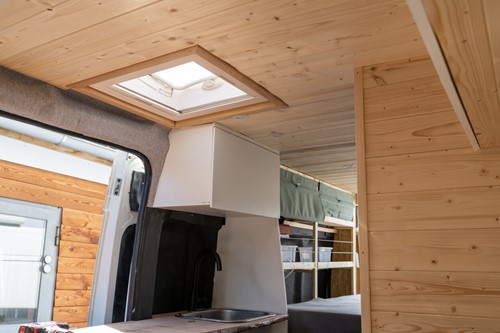
The disadvantages of wooden panelling are that it will add weight to your campervan, it’s trickier to install than other ceiling options, and wood movement can cause gaps or squeaking.
To securely fit a wooden campervan ceiling, screw thin furring strips to the van ribs, then attach each panel. Opt for lightweight woods like cedar or pine and leave small expansion gaps. Pre-finish boards before installing for added convenience.
2. Integrated LED lighting
Integrating LED lighting into your campervan ceiling will give the space a clean, modern look and is a handy option for adding light into your van. There are several types of lighting to pick from, including task and ambient lighting. So you can choose options that reflect how you use the different areas of your campervan.
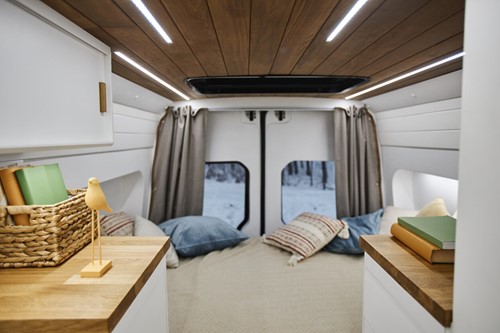
If you decide to add integrated lighting into your ceiling, you’ll need to run the wiring before closing the ceiling. Cutting holes in the ceiling for lights also reduces flexibility later.
To install, run 12V wiring in conduit before adding insulation and use a shallow-depth LED puck to fit the small ceiling cavity. Remember to test lighting circuits before installing your chosen panels.
3. Skylights
Skylights are a lovely option to personalise your campervan ceiling, as they flood the space with natural light, improve airflow, and help to reduce condensation.
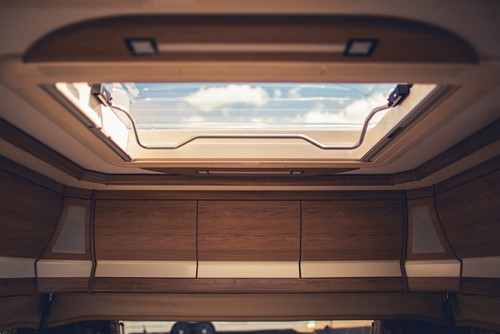
A skylight can also make small vans feel larger by creating an illusion of space. One potential disadvantage of opting for a skylight in your campervan ceiling is that you’ll have to accurately cut a hole in your roof. There’s also a risk of leaks if it’s not sealed correctly. It can also negatively impact on insulation, making the campervan hotter or colder depending on the temperature.
To install a skylight, use a jigsaw or nibbler to cut the roof opening, apply butyl tape, then seal edges with self-levelling lap sealant.
Complete the task by building an interior trim ring that integrates into the finish of your ceiling.
4. Fibreoptic “starry sky” ceiling
A starry sky ceiling can be created using fibreoptic lights in a way that makes it look like you’re sitting outside. It creates a dramatic, luxurious night-time ambience, uses very little power, and is extremely lightweight. However, installation is time consuming as the fibres need to be threaded through dozens of tiny holes, and the light engine takes up space.
For a fibreoptic campervan ceiling, install a removable panel or false ceiling, drill tiny holes and feed fibres through before the final mounting. Mount the LED light engine in a cabinet or ceiling cavity.
5. Painted ceiling
A campervan ceiling made from plywood, MDF, or metal can be painted to suit your tastes and add instant character. This is the lightest and cheapest ceiling upgrade option available and it’s very easy to repair or repaint should damage or fading occur. Depending on the colour you choose, a painted ceiling can brighten up your campervan and make it appear more spacious.
One main disadvantage is that painted ceilings show imperfections easily. Plus, they aren’t as durable as wood or fabric options, and are less insulating unless they’re paired with foam board.
For a painted ceiling, use thin, flexible plywood if covering ribs and prime the area with stain-blocking primer to avoid bleed. Opt for semi-gloss paint which allows for easier cleaning.
6. Metal accents
Metal accents, such as aluminium or brushed steel, give your ceiling a sleek, modern look. They are usually lightweight depending on the metal you choose, and can be used to highlight seams or transitions. However, metal accents can make a homely campervan feel cold or industrial. It can also reflect sound and increase noise, as well as conduct heat.
To install metal accents, use flat trim to hide panel joints, attach panels with small screws or automotive adhesive, and consider pairing them with wood to soften the overall look
7. Cork ceiling panels
Cork ceiling panels offer excellent sound and thermal insulation, and are very lightweight. They provide a natural, warm texture, and are an eco-friendly option for environmentally conscious campervan owners.
The soft surface of cork ceiling panels means they can dent or chip, and you’ll need to use high quality adhesive to stop them from sagging. There aren’t many colour options unless you decide to paint them, which can leave little room for personalisation.
To create a cork campervan ceiling, use cork sheets or tiles with contact cement, seal with a matte polyurethane for increased durability, and adhere to a thin plywood sub-ceiling for optimum results.
8. Quilted fabric panels
For a plush, cosy, high end campervan aesthetic, opt for quilted fabric panels. Not only do they look great, but they also offer excellent sound absorption and hide wires, insulation, and any other irregularities with ease.
There are some disadvantages of using quilted fabric panels. They’re harder to clean than other options, especially if you choose light fabrics. They can trap moisture if they’re not properly ventilated, and will add some weight to your campervan.
If you love the idea of a quilted campervan ceiling, use 1/4" or 1/2" foam wrapped in marine vinyl or durable fabric, staple these to thin plywood panels, then screw the panels into furring strips. Choose mildew-resistant materials to ensure durability.
9. Stretched fabric
Stretched fabric ceilings are very lightweight, boast a seamless, modern appearance, easily hide wiring and other imperfections, and are simple to replace or remove. But the stretched fabric can be prone to sagging if it’s not tensioned properly. It also isn’t as durable as plywood, and can be damaged by condensation if not cared for correctly.
To install a stretched fabric ceiling, use a track system, stretch your chosen breathable fabric across it and tension this evenly. You could also install LED strips behind the fabric for soft backlighting that provides a calming, romantic aesthetic.
10. Multi-level or stepped ceilings
A multi-level or stepped campervan ceiling adds depth and visual interest. It’s also great for hiding ducts, wiring, or LED strip troughs, and can be used to create dedicated lighting zones.
This ceiling type requires careful planning to avoid stealing headroom. Plus, it requires more time and materials than any of the other options, and can be difficult to achieve in campervans with an irregular shape.
For a multi-level or stepped campervan ceiling, create shallow drops using thin plywood and lightweight framing and use recesses to house LED strips or star-fibre bundles. Keep the lowest level to a minimum depth of 0.5 to one inch to preserve headroom.
Specialist motorhome and campervan insurance through Ripe
Whether you’re designing a new campervan or updating your current model, specialist motorhome and campervan insurance through Ripe can give help to give you peace of mind while you’re on the road.
Get a quick online quote today.
Please note the information provided on this page should not be taken as advice and has been written as a matter of opinion. For more on insurance cover and policy wording, see our homepage.
Please enter a valid email address.
Please Please tick one of the boxes below.
The latest news – direct to your inbox.

Subscribe for all the latest news, tips and offers from the Ripe Group. You can unsubscribe at any time. For information on how we use your data, please see our Privacy policy.
Thank you for subscribing, you’ll be hearing from us soon!