

Most Overhyped Europe City Breaks 2026


From Barcelona to Warsaw, Europe’s most famous city break destinations have never been easier to discover. Films, social media, influencer content and tourism marketing now shape how cities are imagined long before travellers arrive. But what happens when reality doesn’t match the promise?
Our research examines the Expectation vs Reality gap across Europe’s most visited city break destinations. We reveal where travel hype most often falls short, and which cities exceed expectations.
Why travel expectation matters
Modern travel is no longer shaped only by guidebooks and word of mouth. Expectations are formed through social media imagery, viral travel videos and reels, bucket-list culture and “must-see” rankings.
As a result, many tourists arrive with a specific image of what a city "should" be like in their head. But this is often more idealised, calmer, or better value than reality. When those expectations are not met, it can lead to disappointment.
“It didn’t match what I thought it would be”.
What the research measures
In this research, we focused on how often tourists say that a European city failed to live up to what they expected before arriving.
We took 30 of Europe’s most popular city break destinations and measured them using three metrics.
Firstly, we analysed pre-arrival hype, using millions of social media hashtags and thousands of news articles to find out how heavily a destination is promoted, discussed and anticipated before travel. This generates an Expectation Score.
We then identified the top 10 most popular tourist attractions in each place, based on visitor numbers and review volume. We analysed more than 74,364 of the most recent Tripadvisor reviews for those attractions, looking for phrases that show reality failed to meet what visitors expected. This generates a Reality Score.
For example:
- “Not as pretty as I thought it would be”
- “More crowded than I imagined”
- “The cost surprised me”
The Expectation Gap sits in the middle – a ranking which compares those two scores and shows where the difference between hype and experience is widest. Higher rankings show destinations where expectations fall short most often.
Europe’s biggest Expectation Gaps, revealed
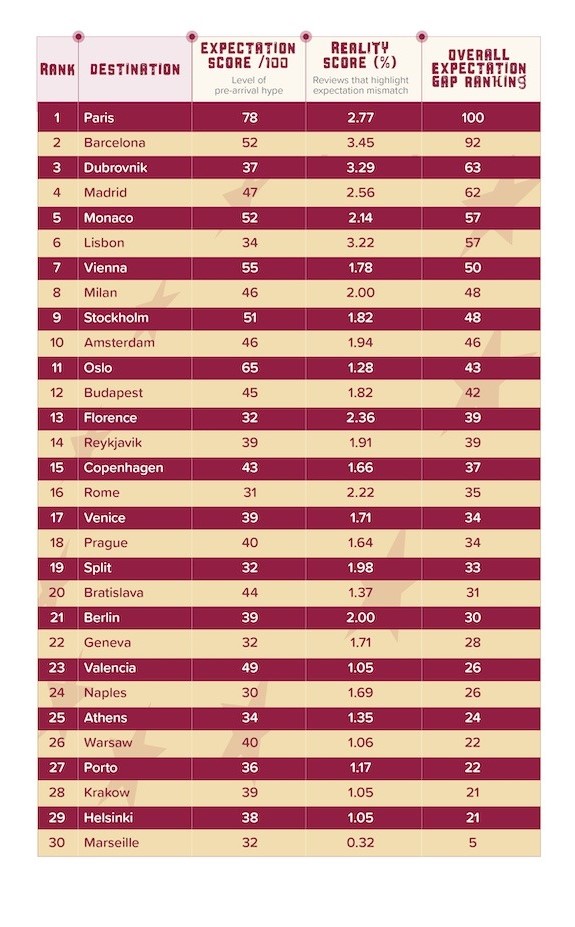 Paris ranked top in our research, with an Expectation Score of 78/100 - much higher than any other destination analysed. This huge pre-arrival hype, created by the 'aura' of Paris, translates into the largest overall Expectation Gap. 2.77% of reviews explicitly referenced a mismatch between what visitors expected and what they experienced.
Barcelona records the highest Reality Score in our analysis, with 3.45% of attraction reviews highlighting expectation mismatches. Barcelona is therefore where disappointment is most frequent. This isn’t necessarily because expectations are too high, but because cost and crowding can ruin the experience more than visitors anticipate.
Both Dubrovnik (3.29%) and Lisbon (3.22%) record high Reality Scores despite having moderate Expectation Scores. This suggests that rather than over-hype, visitor perceptions of these destinations haven’t yet caught up with recent surges in popularity, pricing and crowd density.
Monaco ranks fifth overall, combining a high Expectation Score (52) with a Reality Score of 2.14%. What’s notable is that visitors already expect Monaco to be expensive yet reviews still reference a mismatch between cost and experience.
Destinations such as Vienna, Milan, Stockholm and Amsterdam, meanwhile, combine relatively high expectation with moderate reality mismatch rates. The result is not dramatic disappointment, but small gaps between promise and delivery.
Interestingly, Oslo has an Expectation Score of 65, ranking among the most hyped destinations, yet its Reality Score sits at just 1.28%. This suggests that Oslo’s image, which is often centred on design, nature and quality of life, matches closely with the experience visitors encounter.
Hidden Gems: where reality outstrips expectation
Not every destination suffers from over-hype. In fact, many of the cities in our study show very low expectation gap scores. These destinations tend to generate less pre-arrival hype, offer more manageable crowd levels, feel better value for money and ultimately deliver experiences that align closely with what visitors imagine. In these cities, expectations are often more realistic, leading to greater satisfaction.
Marseille ranks at the bottom of the table, with a Reality Score of just 0.32%, the lowest of any destination analysed. With a relatively modest Expectation Score of 32, visitors tend to arrive without a fixed or idealised image of the city. Unlike more polished French destinations, Marseille is widely understood to be raw, coastal and lived-in, shaped by its port, diverse neighbourhoods and everyday urban rhythm.
Krakow combines a mid-range Expectation Score of 39 with a low Reality Score of 1.05%, placing it among the strongest performers in our study. The city’s walkable and compact old town, clear tourist zones and manageable crowd levels help ensure that reality closely matches anticipation.
Helsinki records a Reality Score of 1.05%, one of the lowest in the dataset, alongside an Expectation Score of 38. The city’s image, often defined by calm streets, contemporary design, waterfront space and a slower pace, translates well into lived experience.
Warsaw’s Expectation Score of 40 places it in the middle of the ranking, but its Reality Score remains low at 1.06%. Many visitors arrive with limited preconceptions beyond a rebuilt old town and a sense of modernity, and are often surprised by the city’s size, green spaces and cultural infrastructure.
Porto records an Expectation Score of 36 and a Reality Score of 1.17%, placing it firmly among Europe’s hidden gem city breaks. Visitors generally expect a scenic riverside city with historic streets and food-and-wine culture. While Porto has grown in popularity, its compact layout and slower pace than Lisbon help prevent the experience from feeling overwhelming.
What creates a travel expectation gap?
Across our research, four themes explain why expectations can fall short.
Crowding and overtourism
Many visitors expect iconic landmarks to feel romantic and awe-inspiring. Instead, they encounter long queues, congestion and limited space to enjoy the experience. This is especially common in destinations with heavy peak-season tourism, cruise ship arrivals and small old towns.
Paris
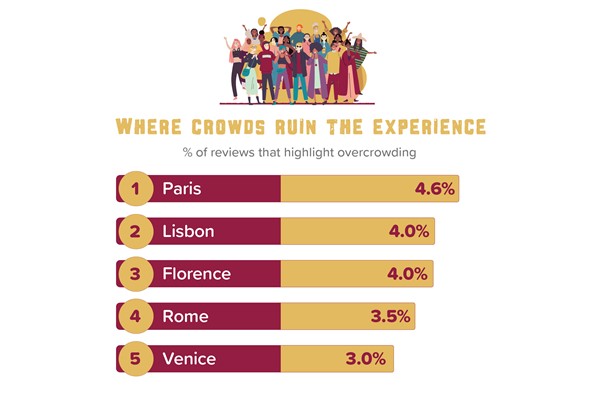
Paris ranks highest for crowd-related expectation gaps, with 4.6% of reviews referencing overcrowding. Visitors often arrive looking for an ‘Emily in Paris’ experience, imagining space to wander about and explore landmarks. But instead, they encounter queues and vast crowds – to see icons such as the unexpectedly tiny Mona Lisa - which can put a dampener on the trip.
Lisbon
With 4.0% of reviews mentioning disappointment around crowding, Lisbon is a city where expectations don’t match up with reality. Many visitors simply don’t anticipate the volume of tourists at viewpoints, trams, and historic streets, making the experience feel busier than imagined.
Florence
Florence’s crowding score (4.0%) highlights the tension between scale and demand. The city’s compact historic centre struggles to deal with peak visitor numbers, leading to experiences that feel rushed or compressed vs expectations.
Rome
In Rome, 3.5% of reviews reference crowd-related disappointment. Visitors expect crowds but may underestimate how much congestion impacts visibility and time spent at major sites like the Trevi Fountain or Colosseum, particularly during peak season.
Venice
Venice’s 3.0% crowding score is surprising given that the city is so renowned in the media for its lack of space. It’s likely that the score reflects an experience that many visitors expect but in reality struggle with.
Value for money
Price expectations are often set by reputation. When entrance fees, food, accommodation or add-ons feel disproportionate to the experience, disappointment follows - even if the experience itself is not poor.
Dubrovnik
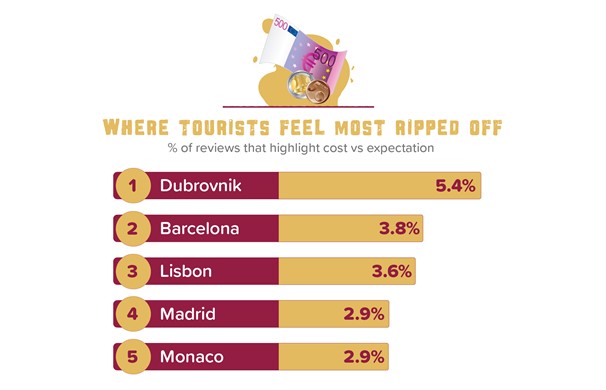
With 5.4% of reviews referencing cost-related disappointment, Dubrovnik ranks first for value-for-money concerns. Visitors often arrive expecting a historic, atmospheric city experience, but instead describe entrance fees, food and drinks as disproportionately expensive for what’s delivered. The city’s compact size and intense tourist concentration amplify the sense that prices are driven by demand rather than experience.
Barcelona
Barcelona’s reputation sets high expectations around accessibility and value. In reality, 3.8% of reviews highlight a mismatch between cost and experience, particularly at major attractions where 'getting you in and out’ is prioritised over time spent. For many, the issue isn’t price alone - it’s the feeling of paying more for less.
Lisbon
Lisbon’s rapid rise in popularity has outpaced many visitors’ expectations around pricing. 3.6% of reviews reference value concerns, often expressing surprise at how expensive attractions, food or transport feel compared to the city’s traditionally affordable image.
Madrid
Madrid’s value-related disappointment (2.9%) is quieter but consistent. Visitors typically expect a reasonably priced cultural capital. But when costs rise around flagship attractions, the experience can feel less value-for-money than anticipated - particularly compared with other Spanish cities.
Monaco
In Monaco, 2.9% of reviews highlight cost mismatches despite the city’s luxury reputation. This suggests that even when high prices are expected, visitors still anticipate a level of access, service or spectacle that isn’t always their true experience.
Over-idealised imagery
Destinations usually look calmer, cleaner and emptier online than in reality. When visitors arrive and find something very different, the contrast can be hard to swallow.
Barcelona
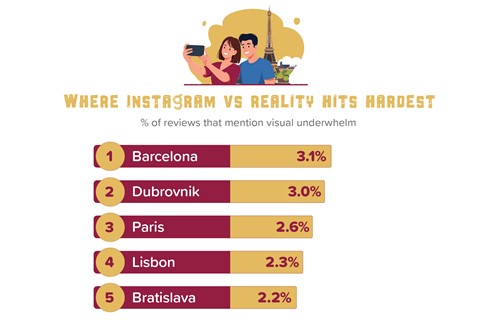
Barcelona tops this category, with 3.1% of reviews referencing visual expectation gaps. Highly stylised imagery promises openness, while reality often includes crowds, barriers and limited viewpoints - creating a sharp contrast between what’s imagined and what’s experienced.
Dubrovnik
Dubrovnik’s 3.0% visual mismatch score reflects the gap between the imagery seen on TV shows like Game of Thrones (the city’s biggest claim to fame) and real-life experience. Photos emphasise stone streets and sea views, but visitors often encounter congestion, cruise schedules and restricted movement.
Paris
Paris appears again, with 2.6% of reviews referencing visual disappointment. Iconic images shape expectations of romance and calm, but the operational reality of tourism - queues, fencing, crowds - frequently ruining that vision.
Lisbon
Lisbon’s 2.3% score reflects surprise rather than disillusionment. Visitors often expect expansive viewpoints and quiet streets, only to discover popular locations are smaller, busier or harder to access than imagery suggests.
Bratislava
In Bratislava, 2.2% of reviews highlight visual expectation gaps. Visitors often arrive expecting a compact, postcard-perfect old town shaped by curated travel imagery. But reality more often includes limited viewpoints, ongoing development and everyday urban infrastructure that creates a clash.
Condition vs polish
Some destinations are simply less “polished” than people imagine, particularly when expectations are shaped by films or viral content that only focuses on the positive, curated version of a place.
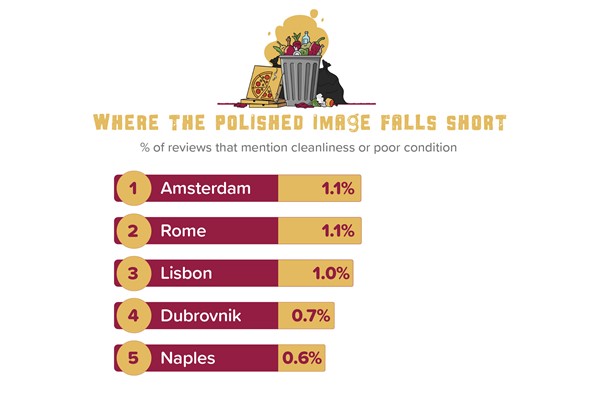
Amsterdam
Amsterdam ranks highest here, with 1.1% of reviews mentioning cleanliness or maintenance issues. Expectations of a pristine, well-managed city mean even small issues - litter, wear, congestion - feel more noticeable.
Rome
Rome’s 1.1% reflects the challenge of maintaining ancient infrastructure under modern tourism pressure. Visitors often accept historic wear but still expect a level of upkeep that isn’t always visible at busy sites.
Lisbon
Lisbon’s 1.0% suggests a mismatch between colourful, curated imagery and the realities of ageing infrastructure in high-traffic areas.
Dubrovnik
In Dubrovnik, 0.7% of reviews mention condition-related gaps. Expectations of a beautiful historic setting mean even minor maintenance issues stand out more sharply.
Naples
Naples has 0.6%, reality score here, reflecting a city where visitors may expect grit and authenticity, but not enough to remove all disappointment when it comes to cleanliness standards.
The four categories of Expectation Gap
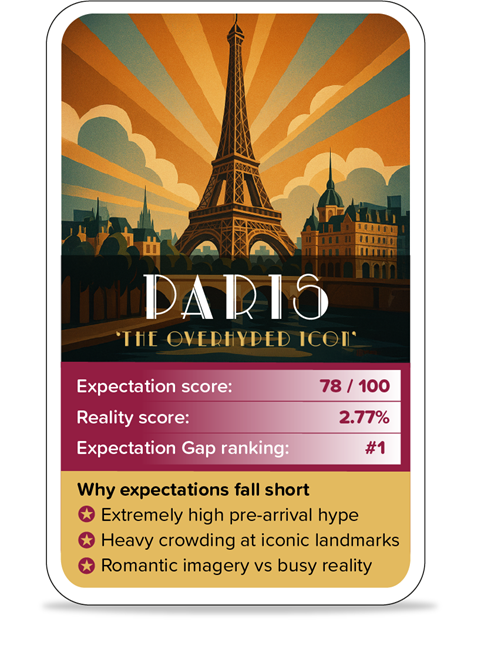
Paris is one of Europe’s most idealised cities - and that comes with weight. Films, fashion, literature and decades of tourism marketing have created a polished vision of the city long before visitors arrive. In the reviews we analysed, Paris records the highest expectation score of any destination and the largest expectation gap overall. Visitors don’t describe Paris as “bad”, but reference queues, congestion and experiences that feel more stressful than they imagined.
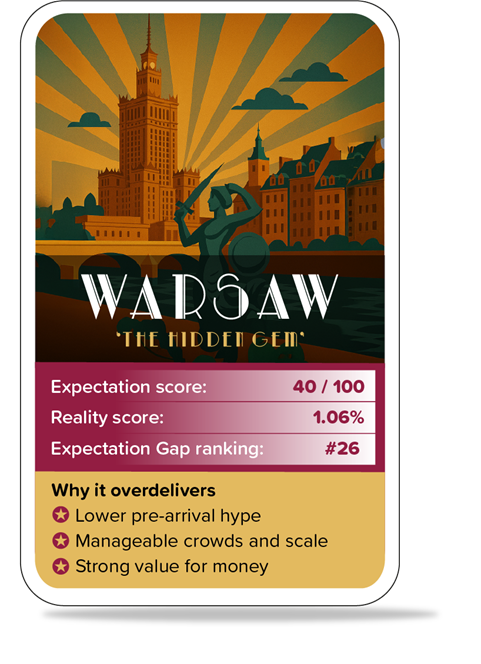
Warsaw rarely dominates travel bucket lists, and this lack of hype works in its favour. With a moderate expectation score and one of the lowest expectation mismatch rates in our study, Warsaw consistently delivers experiences that align with - or exceed - what visitors anticipate. Reviews rarely reference disappointment; instead, they reflect surprise at the city’s scale, culture, value and atmosphere.
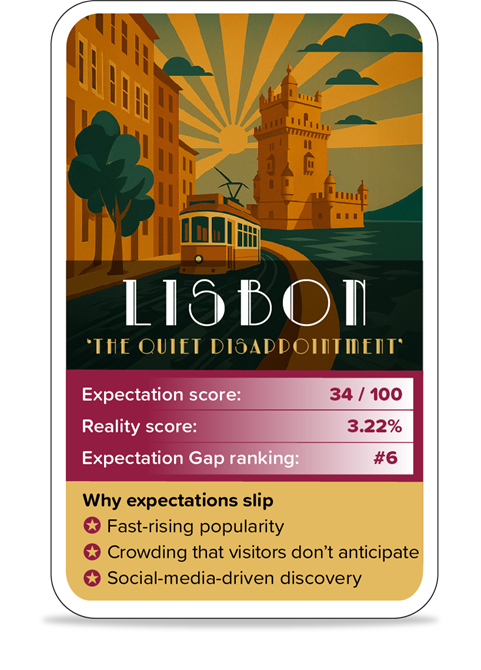
Lisbon doesn’t carry the same historic hype as Paris or Rome, yet it records one of the highest rates of expectation mismatch in our study. As Lisbon’s profile has risen quickly through social media and travel content, visitor expectations have increased faster than the city’s capacity to absorb them. Reviews frequently reference crowding, queues and experiences that feel busier or smaller than expected.
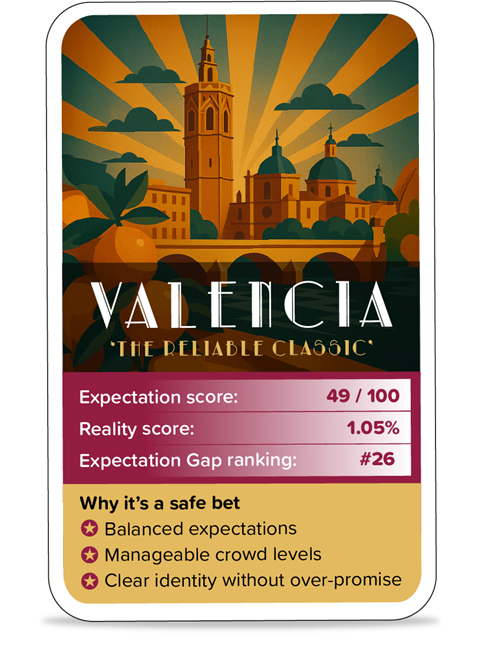
Valencia sits in a sweet spot - reasonably well-known but not over-hyped. With a mid-range expectation score and one of the lowest expectation mismatch rates among major European cities, Valencia consistently delivers what visitors expect, and occasionally more. Reviews suggest the city feels good value and manageable in size.
What tourists say (in their own words)
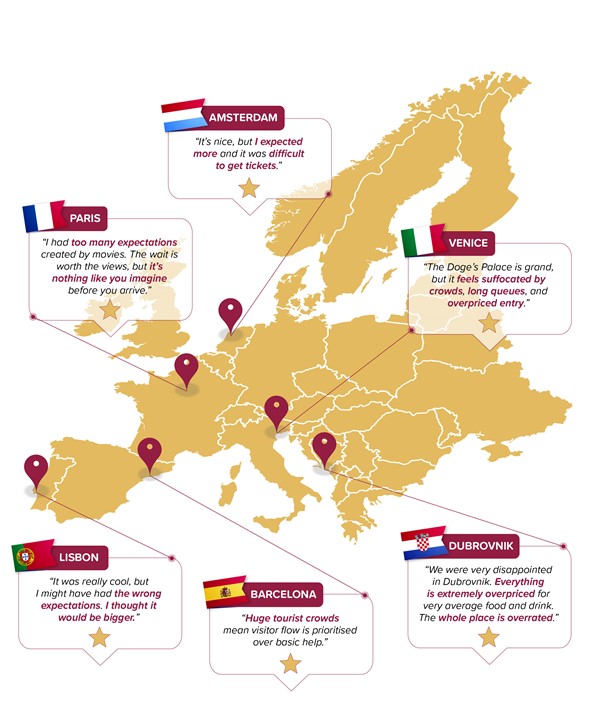
Throughout the reviews data, visitors regularly referenced expectations being disappointed.
Paris
“I had too many expectations created by movies. The wait is worth the views, but it’s nothing like you imagine before you arrive.”
Dubrovnik
“We were very disappointed in Dubrovnik. Everything is extremely overpriced for very average food and drink. The whole place is overrated.”
Barcelona
“Huge tourist crowds mean visitor flow is prioritised over basic help.”
Lisbon
“It was really cool, but I might have had the wrong expectations. I thought it would be bigger.”
Venice
“The Doge’s Palace is grand, but it feels suffocated by crowds, long queues, and overpriced entry.”
Amsterdam
“It’s nice, but I expected more and it was difficult to get tickets.”
Summary
If you’re planning a European trip, our research suggests that less obvious destinations can offer more rewarding experiences. Meanwhile, over-hype can increase expectations beyond what any destination can deliver. That doesn’t mean that the likes of Paris or Barcelona can’t make for an incredible trip – but rather managing expectations may be key to enjoying your time there.
Methodology
To assess which European city break destinations are most overhyped, we selected 30 of Europe’s most visited city break destinations based on global tourism statistics, cultural prominence, and overall popularity in online travel content and search trends.
We developed an Expectation Score using:
-
Social media - analysis of millions of social media posts and travel related hashtags related to each destination, alongside analysis of each city's official tourist board social media for reach, engagement
-
News and travel content - sentiment analysis on thousands of news articles and travel features
We then identified the top 10 most visited attractions for each destination and collected user reviews from Tripadvisor. In total, we analysed 74,364 of the most recent Tripadvisor reviews.
Using keyword and phrase analysis, we found the proportion of reviews that expressed a negative expectation mismatch. From this, got a Reality Score highlighting how frequently visitor expectations are reported as unmet.
The Expectation Gap is the difference between the level of pre-arrival hype (Expectation Score) and the frequency of reported disappointment in reviews (Reality Score). A larger gap suggests that visitor expectations are more often unmet, indicating a higher degree of perceived over-hype.
We ranked all 30 destinations by their Expectation Gap across four core themes to reveal which cities most frequently fail to meet travellers’ expectations relative to their hype.
Specialist motorhome insurance through Ripe
If you're travelling Europe in your motorhome this year, you may want to consider specialist motorhome insurance through Ripe. Our Europe cover comes as standard, so you can have peace of mind while touring across the continent.
Get an instant online quote today.
Please note the information provided on this page should not be taken as advice and has been written as a matter of opinion. For more on insurance cover and policy wording, see our homepage.
Please enter a valid email address.
Please Please tick one of the boxes below.
The latest news – direct to your inbox.

Subscribe for all the latest news, tips and offers from the Ripe Group. You can unsubscribe at any time. For information on how we use your data, please see our Privacy policy.
Thank you for subscribing, you’ll be hearing from us soon!